Transitioning to Electric Vehicles

Vehicle Fleet, Shenzhen, CHN
16,000 public buses
Sector: TRANSPORTATION
Annual Emissions Reduction Potential
-
Total Project Impact: 1 MtCO2e
-
ERS Global Potential: 3 BtCO2e
Download the PDF: Transitioning to Electric Vehicles
How Electric Vehicles Reduce Emissions
Existing Practice: Road transportation is dominated by internal combustion engine (ICE) vehicles that burn petrol (i.e. gasoline) or diesel, producing carbon dioxide, nitrogen oxides, and particulate matter directly at the tailpipe. These emissions are concentrated in urban areas, contributing to climate change and local air pollution. While vehicle fuel efficiency has improved over time, emissions remain fundamentally tied to fuel combustion, and any gains in efficiency have been largely offset by more driving and more cars on the road.
A Potential Solution: Electric vehicles (EVs) replace combustion engines with electric drivetrains, eliminating tailpipe emissions entirely. When paired with clean electricity grids, EVs significantly reduce overall greenhouse gas emissions compared with conventional vehicles but can drive up emissions from electricity generation in regions where fossil fuels dominate power production. Large-scale EV adoption also improves urban air quality and delivers further emissions reductions over time as power systems continue to decarbonize.
Shenzhen Decarbonizes with EVs
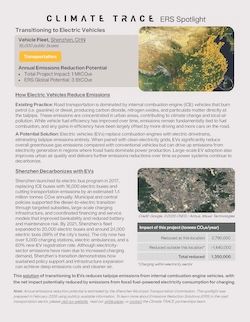
Shenzhen launched its electric bus program in 2017, replacing ICE buses with 16,000 electric buses and cutting transportation emissions by an estimated 1.4 million tonnes CO2e annually. Municipal and central policies supported the diesel-to-electric transition through targeted subsidies, large-scale charging infrastructure, and coordinated financing and service models that improved bankability and reduced battery and maintenance risk. By 2021, Shenzhen’s fleet expanded to 20,000 electric buses and around 24,000 electric taxis (99% of the city’s taxis). The city now has over 5,000 charging stations, electric ambulances, and a 60% new-EV registration rate. Although electricity-sector emissions have risen due to increased charging demand, Shenzhen’s transition demonstrates how sustained policy support and infrastructure expansion can achieve deep emissions cuts and cleaner air.
This solution of transitioning to EVs reduces tailpipe emissions from internal combustion engine vehicles, with the net impact potentially reduced by emissions from fossil fuel-powered electricity consumption for charging.
Note: Annual emissions reduction potential is estimated by the Shenzhen Municipal Transportation Commission. This spotlight was prepared in February 2026 using publicly available information. To learn more about Emissions Reduction Solutions (ERS) in the road transportation sector, please visit our website, read our white paper, or contact the Climate TRACE partnerships team.