Cleaning up the Copperbelt: tracking and reducing emissions and air pollution from Zambia's mining sector
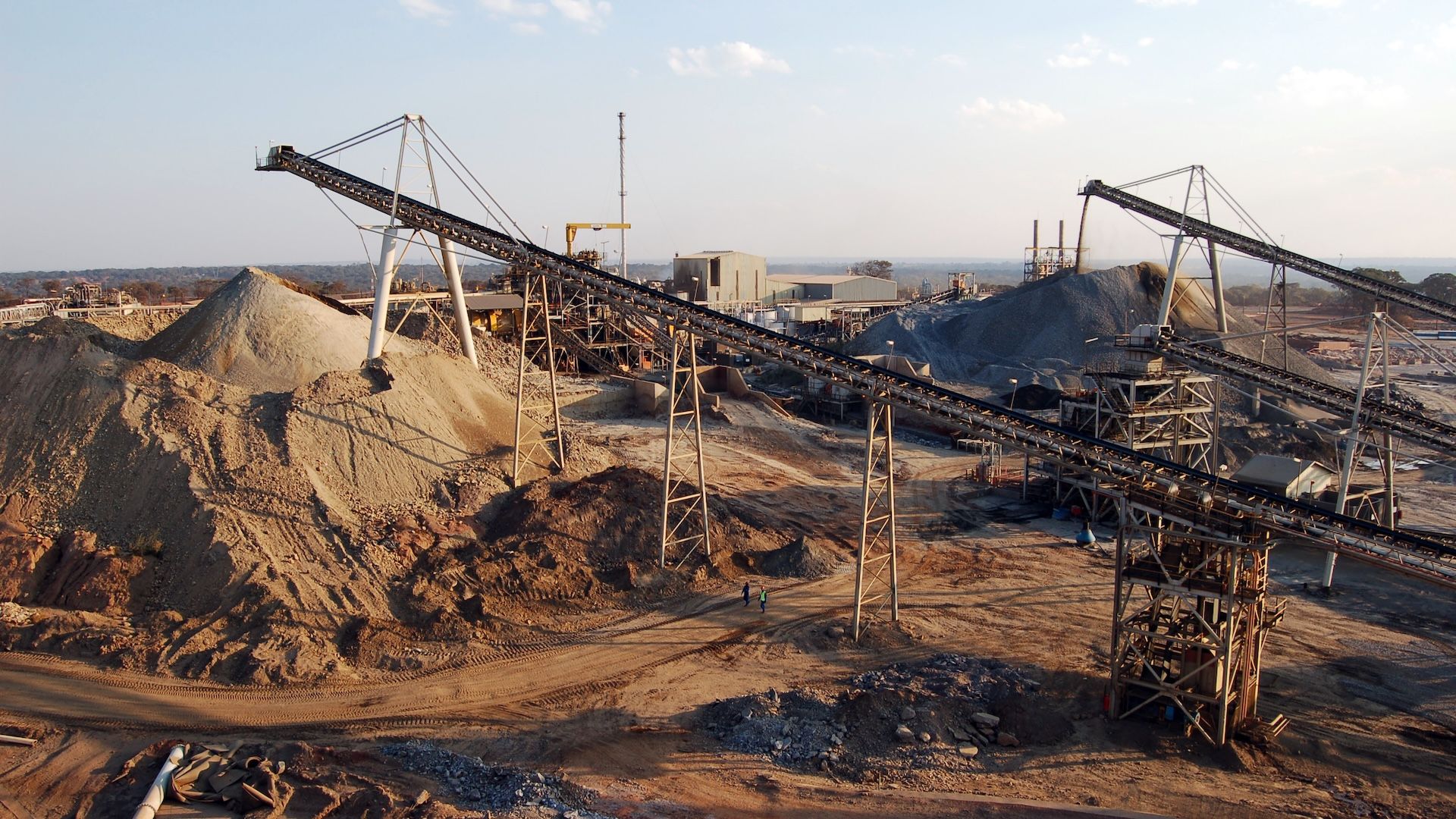
For a century, copper has been central to Zambia's economy. Mining and refining the metal accounts for roughly 15 percent of Zambia's GDP and more than 70 percent of the country's exports, according to the World Bank. Zambia is Africa's second-largest producer of copper, behind the Democratic Republic of Congo. (The Central African Copperbelt straddles the two countries' shared border.) In fact, copper is so important to the nation that the nickname of their beloved national football team, Chipolopolo, translates as "the Copper Bullets."
And the country's copper industry continues to grow. The Zambian government has set an ambitious target to triple the nation's annual copper production by 2031. In June, Zambia signed a monumental, US-backed $491 million deal designed to strengthen global supply chains for critical minerals and metals. The Central African Copperbelt is the world's largest combined reserve of copper and cobalt, which are in increasing demand amidst decarbonisation and the move toward electric vehicles, batteries, renewable energy, and other modern technologies that depend on these minerals and metals.
Much of the nation's mining legacy is rooted in the Copperbelt Province, the heart of Zambia's copper industry and primary industrial and commercial hub. Located in north-central Zambia, the province also boasts the country's highest urbanization and education rates.
Just as other upstream materials like steel and aluminum are undergoing green transitions, so too is copper. Across the Copperbelt and globally, sector leaders are working to mitigate environmental and health impacts, ensuring they can supply the essential inputs for the technologies powering a lower-carbon world.
Impacts beyond the mines and smelter walls
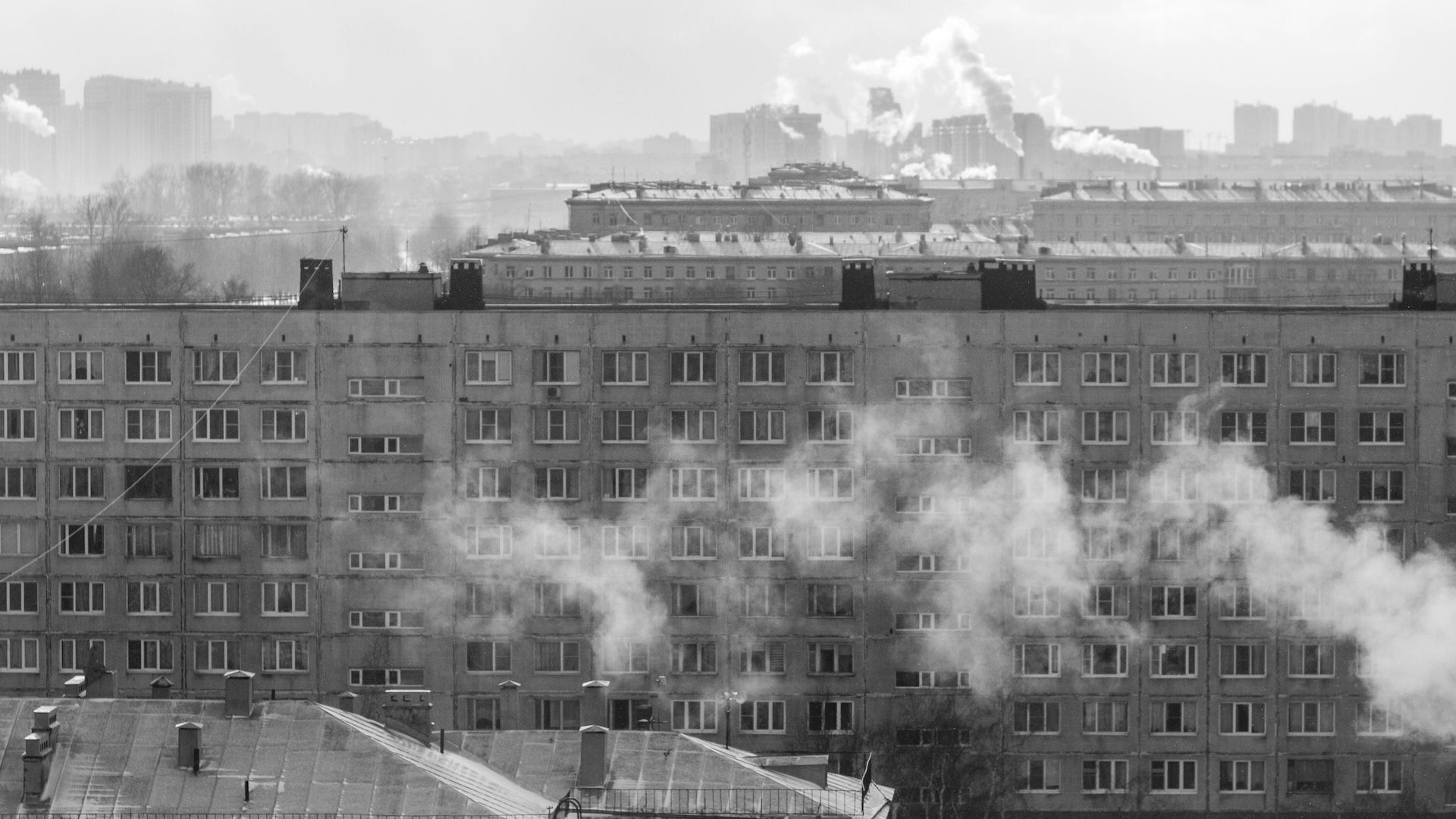
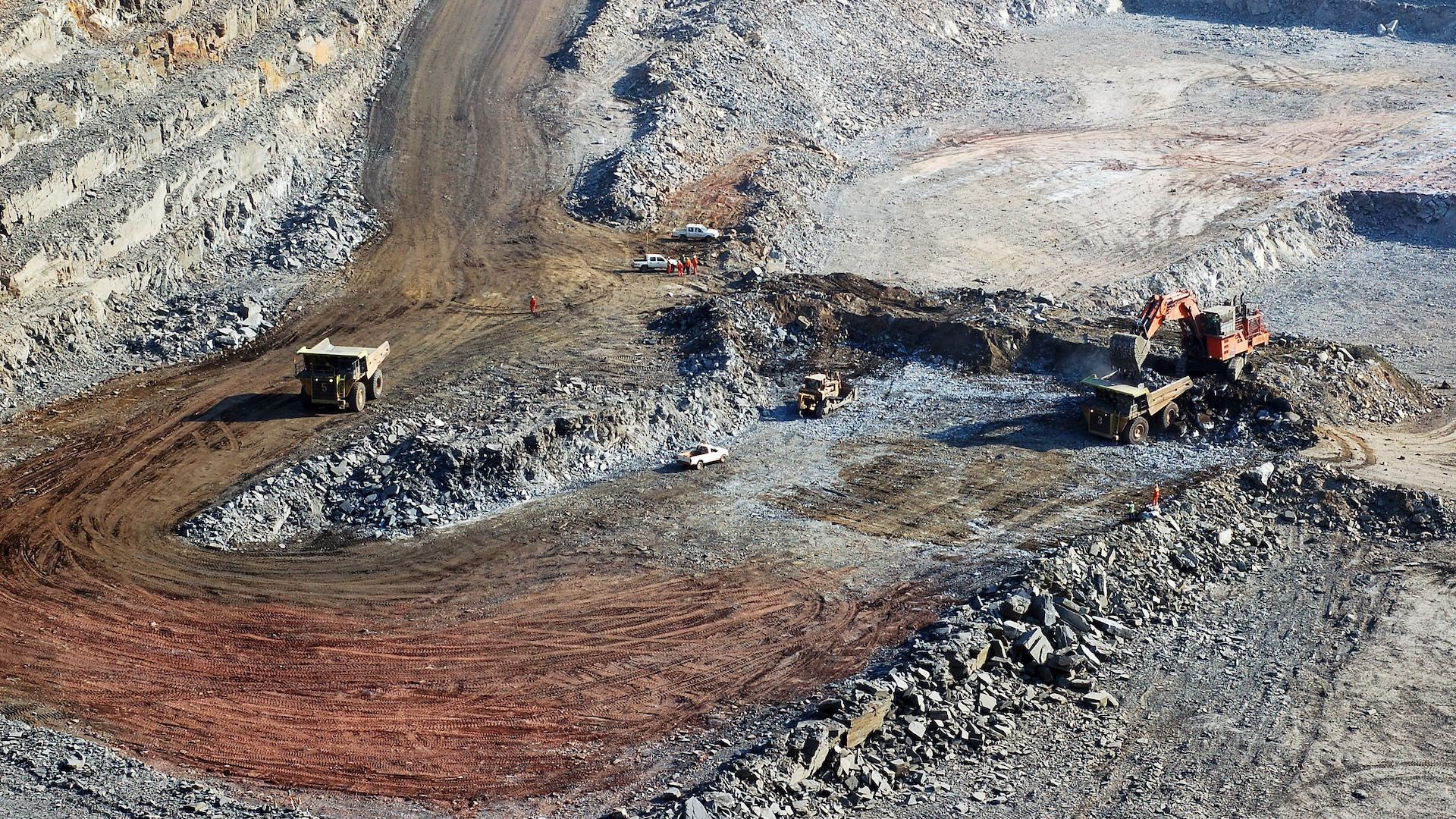
For decades, communities across the Copperbelt have lived with chronic air pollution generated by local mining and mineral processing --- mainly particulate matter and sulfur dioxide (SO₂). Open-pit mining operations, waste rock piles, tailings dams, and constant heavy-vehicle traffic generate large amounts of airborne dust, while massive smelters release sulfur-rich flue gasses into the atmosphere. The Copperbelt is home to an estimated 3.2 million people, where such air pollution comes with very real potential health impacts.
The pollution problem is far from new. A government-backed environmental assessment published in 2002 identified particulate matter and sulfur dioxide as the Copperbelt's most significant environmental health threats, alongside widespread lead contamination in soil.
The same pollutants continue to dominate present-day discussions about the region's environmental future. Long-term exposure to particulate pollution and sulfur dioxide has been linked to increased rates of respiratory and cardiovascular disease, while emissions also contribute to soil acidification, ecosystem degradation, biodiversity loss, corrosion of buildings and infrastructure, and the accumulation of toxic metals throughout the food chain. A 2019 study found that sulfur dioxide concentrations in mining towns such as Kitwe and Mufulira frequently reached levels above 1,000 micrograms per cubic meter --- concentrations associated with increased risks of health impacts and, in some cases, premature mortality following short-term exposure.
New research published earlier this year underscored that "The air quality in the Central African Copperbelt region affected by mining activities serves as a critical indicator of the broader environmental and public health consequences of such industrial operations. In both Zambia and the DR Congo, mining plays a pivotal role in their economies, particularly through the extraction of numerous resources like copper, cobalt, zinc, lithium, and gold. However, these activities often lead to significant air pollution due to dust, emissions from processing plants, and the release of harmful pollutants such as sulfur dioxide and particulate matter."
Mapping copper-related air pollution
According to Zambia's current regulatory framework, mining operations are subject to environmental impact assessments, emissions licensing requirements, and waste management standards under the Environmental Management Act (EMA), while the Minerals Regulation Commission Act (MRCA) governs mining rights and operational safety. Oversight falls primarily to the Zambia Environmental Management Agency (ZEMA).
However, local government officials have had to take a more active approach where oversight has fallen short. Last August, the government ordered the closure of two mining companies in Kabwe, just south of the Copperbelt, over alleged environmental violations, including excessive gas and smoke emissions.
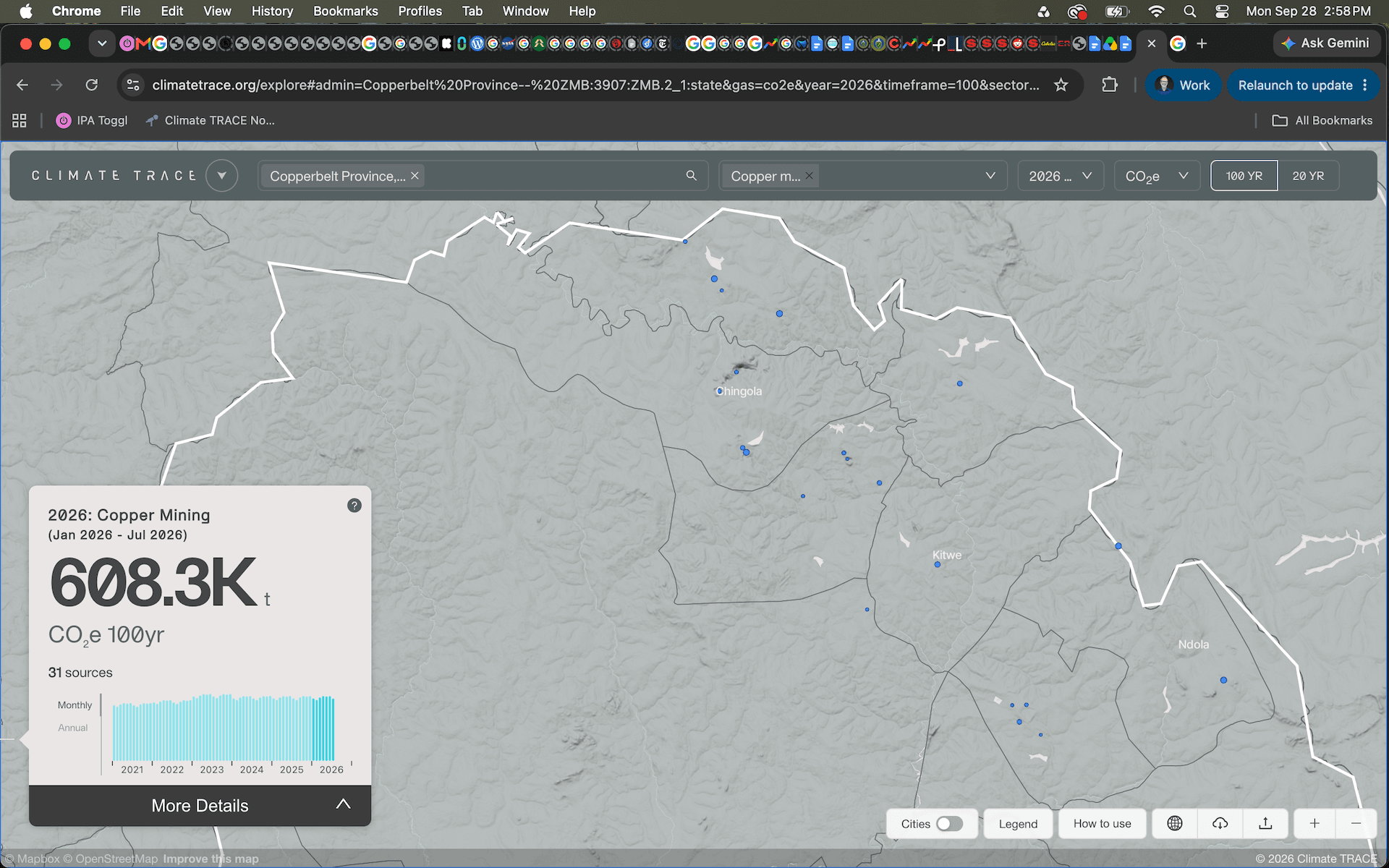
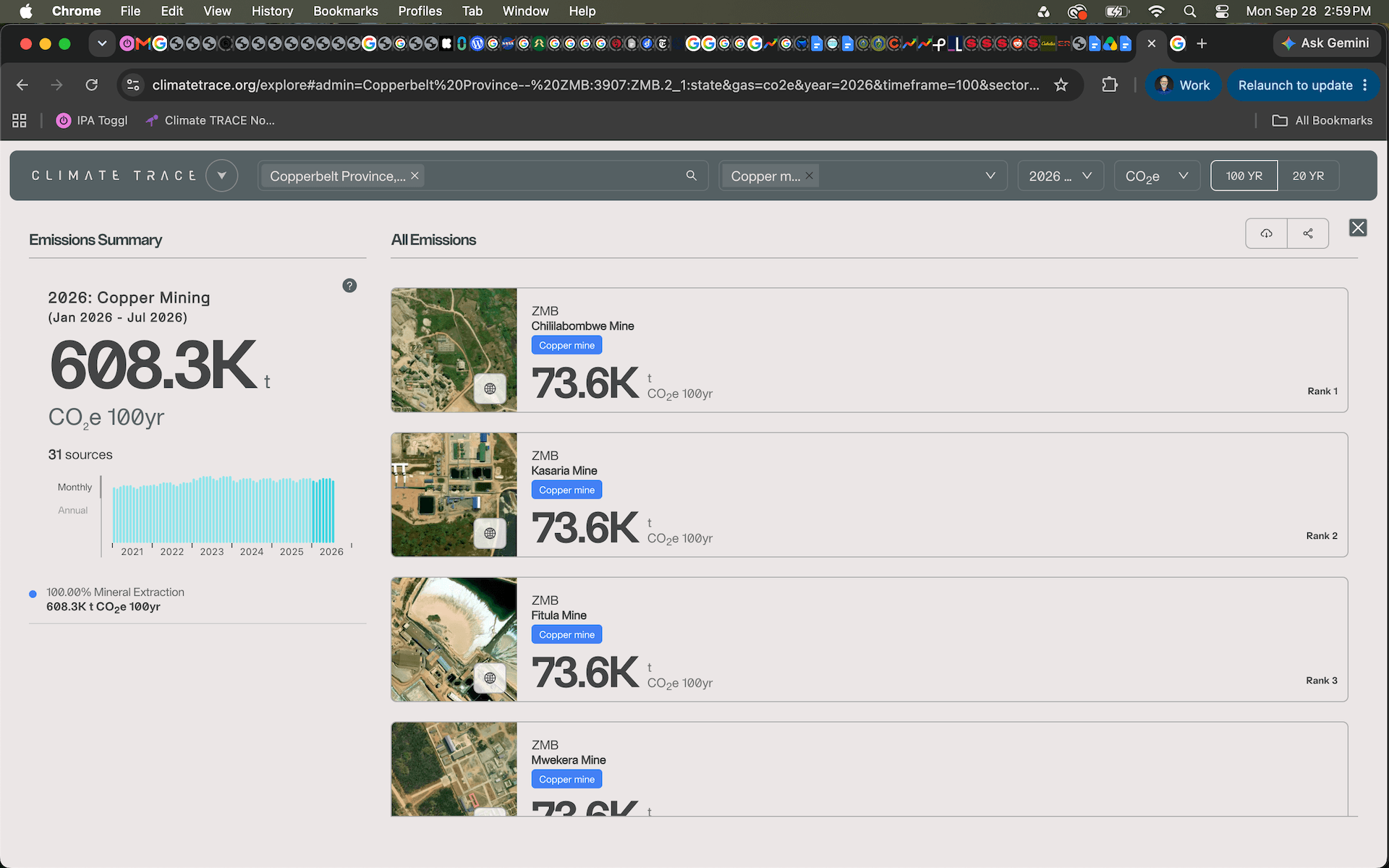
The scale of the Copperbelt's industrial emissions and air pollution becomes even clearer when viewed from above. Roughly a dozen major copper mining operations and complexes dot the Copperbelt province, stretching across the region's largest urban centers, including Kitwe, Ndola, Chingola, Mufulira, Luanshya, Chililabombwe, and Kalulushi.
Collectively, assets across the Copperbelt Province emitted an estimated 7.6 million tons of carbon dioxide equivalent (CO₂e) in 2025. In Ndola --- the Copperbelt's capital --- total emissions reached approximately 1.9 million tons of CO₂e. That same year, the region's most populous city, Kitwe, emitted an estimated 1.1 million metric tons of CO₂e, while Chingola's emissions totaled roughly 750,000 metric tons of CO₂e.
But greenhouse gas emissions reveal only part of the picture. The impacts of mining extend far beyond carbon alone, as harmful particulate matter (PM2.5) drifts outward into surrounding communities and poses potential health risks.
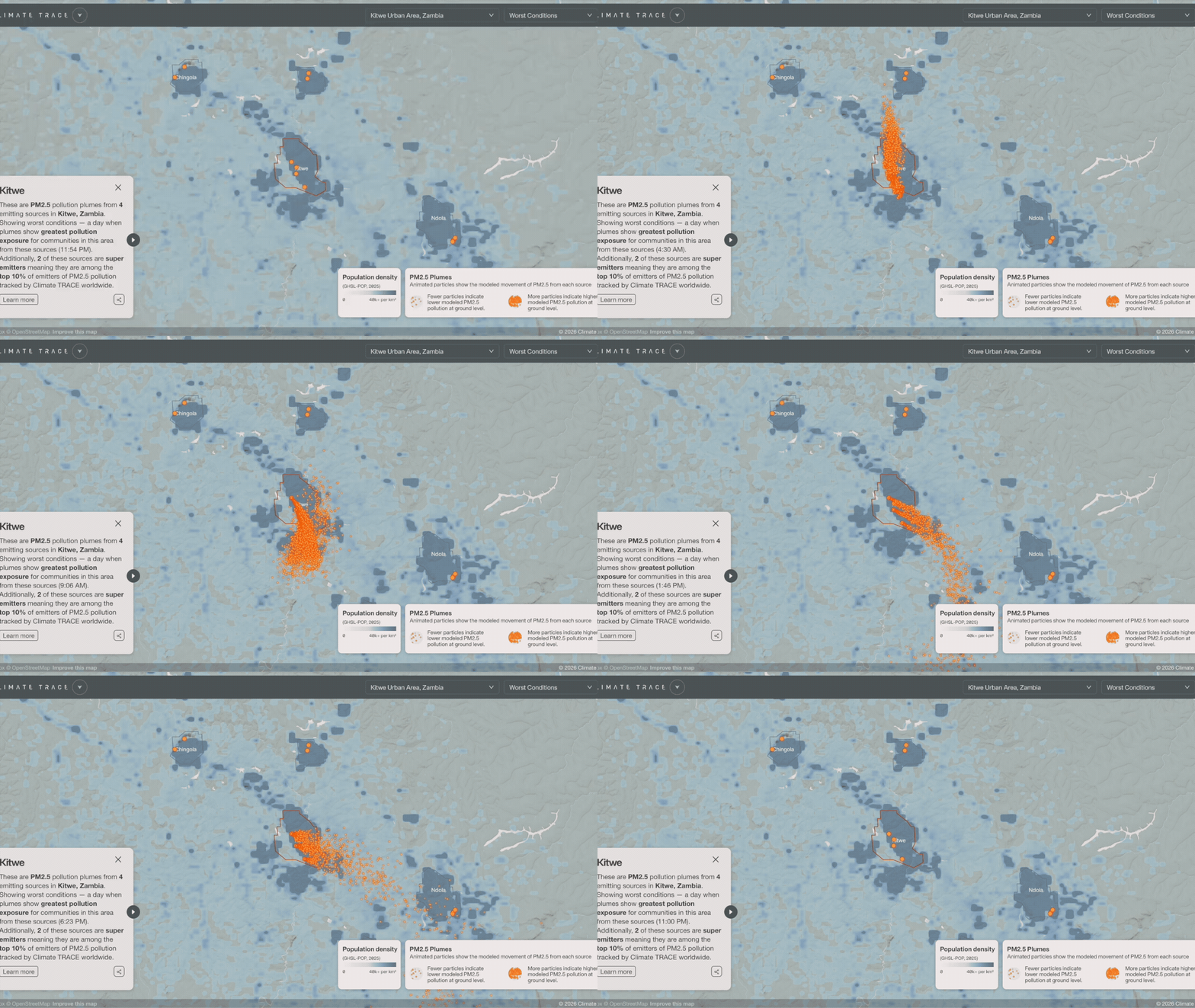
In Kitwe, Mopani-owned copper mines sit on the western edge of the city, abutting residential neighborhoods, schools, and athletic fields. When wind conditions are unfavorable, PM2.5 pollution from these mines blows over the city, where they have the potential to degrade air quality and harm human health.
In Ndola, just south of the city center and the Copperbelt Museum --- an ode to the region's rich mining history --- active copper mines and industrial operations dominate the landscape. When the wind blows from the east or south, as it often does, PM2.5 plumes drift northwest over the populated areas of the city.
A similar dynamic plays out in Chingola, where copper mines in the west and northwest bridge the city limits and popular residential neighborhoods, including the Nchanga Golf Club --- one of the Copperbelt's most highly regarded golf courses. At their worst, PM2.5 pollutants blow to the east, blanketing the city center and northern communities.
The Copperbelt province is also dotted by six "super emitters" --- assets among the highest ten percent of PM₂.₅ emitters tracked by Climate TRACE worldwide --- including various industrial operations, from copper mines to wastewater treatment and power plants.
Two of the province's most populous cities, Ndola and Kitwe, contribute the bulk of this total, each hosting two super emitters. To the north, Mufulira and Chililabombwe harbor one more each.
Looking to the Copperbelt's future
Residents of the Copperbelt have experienced the effects of copper mining pollutants for decades, feeling the environmental and health impacts far beyond the sites where the ore is extracted.
Data-driven tools and insights can support communities and local leadership as they take action and advocate for their health. Solutions such as SO2 capture offer the promise of cleaner air, if broadly adopted. As Zambia answers the call of the global clean energy transition, these tools can help ensure the next defining chapter is one where economic prosperity and cleaner air advance together.
In recent months, Copperbelt operations continue to fluctuate, reflecting the province-wide push for longer-term modernization strategies. In April 2026, two major copper smelters --- Moppani and Chambishi --- announced they would be temporarily shutting down for extended maintenance. The following month, a Chingola copper mine reopened after an 18-year long shutdown and is now projected to produce more than 200,000 tons of ore per month. And then in June 2026, the Nchanga smelter entered a 60-day shutdown for maintenance and repairs.
Looking toward the targets outlined in Zambia's Vison 2030 and National Green Growth Strategy plans, the nation is already working to redefine its industrial mecca. With the goal to become a prosperous middle-income country by 2030, Zambia aims to achieve economic diversification and industrialization through the agriculture, manufacturing, tourism, and of course, mining sectors.
In addition to economic prosperity, both plans are similarly anchored by themes of sustainable development, respect for human rights, and improved inclusivity.
By leveraging transparent data to guide infrastructure development, clean power integration, and emissions controls, the Copperbelt province can transition into a global model for sustainable, low-carbon resource development that protects both its people and its natural capital.